
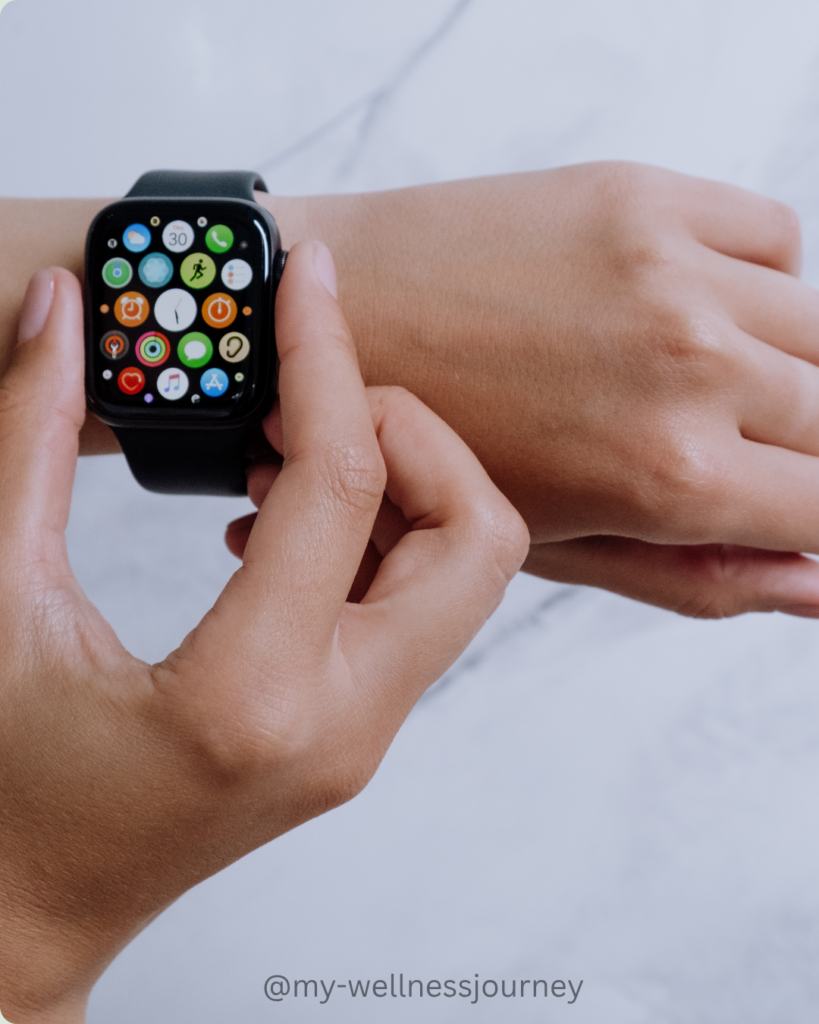
Your smartwatch tells you to stand.
It reminds you to move. It tracks your steps, sleep, heart rate, workouts and activity. Some devices can even give you information about stress and recovery.
All of this can be incredibly useful. Smartwatches and fitness trackers can encourage us to move more, notice patterns and become more aware of our health.
But there is another side to all this tracking that we don’t talk about quite as much.
Is your smartwatch helping you become healthier—or is it giving you one more thing to worry about?
When Wellbeing Becomes Another Target
We live in a world where almost everything can be measured.
Steps. Sleep. Heart rate. Calories. Exercise minutes. Recovery. Activity goals.
For many people, seeing these numbers is motivating. A reminder to get up after sitting for hours can be genuinely helpful. Tracking activity can encourage us to walk more. Sleep data may help us recognise patterns we hadn’t noticed before.
But what happens when useful information quietly becomes another performance target?
You planned a rest day, but your watch tells you that you haven’t moved enough.
You wake up feeling reasonably refreshed, check your sleep data and discover that apparently you didn’t sleep very well.
You have had an exhausting day, but your activity goal isn’t complete.
Suddenly, something designed to support your wellbeing can begin to feel like something else you need to achieve.
Can Smartwatches and Fitness Trackers Increase Stress?
The technology itself isn’t necessarily the problem.
The more interesting question is:
What kind of relationship are we developing with the data?
There is a big difference between:
“That’s interesting. I haven’t moved much today. I’ll go for a walk.”
and:
“I haven’t reached my target. I need to do more.”
One is information.
The other can become pressure.
For some people, constantly checking steps, sleep scores, heart rate or other health data can create unnecessary worry. We can become so focused on what the device says that we stop noticing how we actually feel.
And that’s where health tracking deserves a little more attention.
Your Body Has Its Own Data
Before smartwatches existed, our bodies were already giving us information.
We feel tired.
Our shoulders tighten.
Our breathing changes.
We become restless or irritable.
Concentration becomes harder.
We notice when we need movement, food, rest, connection or simply a few quiet minutes.
The problem is that many of us have become very good at ignoring these signals.
A wearable device gives us external data.
Our body gives us internal data.
Perhaps true wellbeing comes from learning to use both.
Your smartwatch might tell you that you’ve been sitting for too long. That’s useful.
But it cannot fully understand the difficult conversation you had this morning, the pressure you’ve been carrying all week or why today your body might need recovery rather than another workout.
Context matters.
When Healthy Habits Become Another Source of Pressure
This isn’t only about smartwatches.
We can do the same thing with meditation streaks, calorie tracking, exercise apps, productivity tools and even sleep routines.
Something that begins as a way to take care of ourselves can gradually become another standard we believe we have to meet.
And that’s an interesting contradiction.
If your wellbeing routine is making you anxious about doing wellbeing correctly, is it still supporting your wellbeing?
Health doesn’t require perfection.
Some days you will walk 12,000 steps.
Some days your body may need rest.
Some nights you will sleep beautifully.
Others will be disrupted.
That’s being human—not failing a health target.
Use Your Smartwatch as a Tool, Not a Judge
You don’t need to throw away your smartwatch.
Instead, become curious about how you’re using it.
Ask yourself:
- Am I checking this information because it’s useful or because I feel I have to?
- Can I miss an activity target without feeling guilty?
- Does tracking my sleep help me understand my sleep—or make me worry about it?
- Do I trust how my body feels as well as what my device tells me?
- Can I choose rest even when the numbers encourage me to do more?
The answers can tell you a lot about whether your fitness tracker is supporting your wellbeing or quietly adding another layer of pressure.
Calm in a World That Measures Everything
We already have enough things measuring our performance.
Deadlines. Targets. KPIs. Emails. Notifications. To-do lists.
Perhaps our wellbeing doesn’t need to become another performance review.
Smartwatches and wearable technology can be wonderful tools when they help us become more aware—not more anxious.
So the next time you check your steps, sleep score or activity level, check one more source of information.
Pause for a moment and ask:
How do I actually feel today?
Because sometimes the most important health data isn’t sitting on your wrist.
It’s coming from you.
What Is Pressure Really Costing Your Team?
Pressure doesn’t always show up as someone saying, “I’m stressed.”
It can show up in how people communicate, make decisions, respond to challenges, recover after demanding periods and manage the constant expectations of modern work.
Calm Under Pressure gives people practical tools to recognise pressure earlier, regulate their response and recover more effectively—skills they can use in real working moments, not just after they are already overwhelmed.
→ Discover Calm Under Pressure for Your Organisation, book a call now!